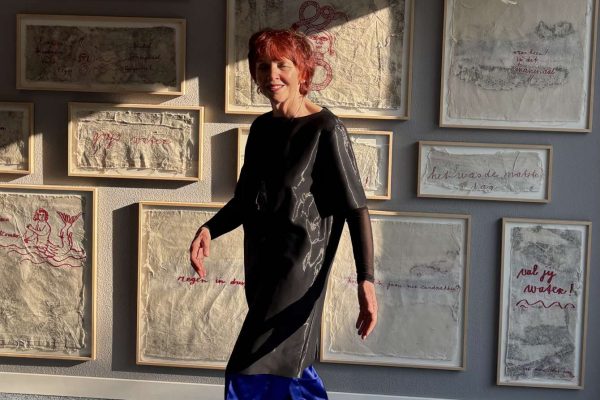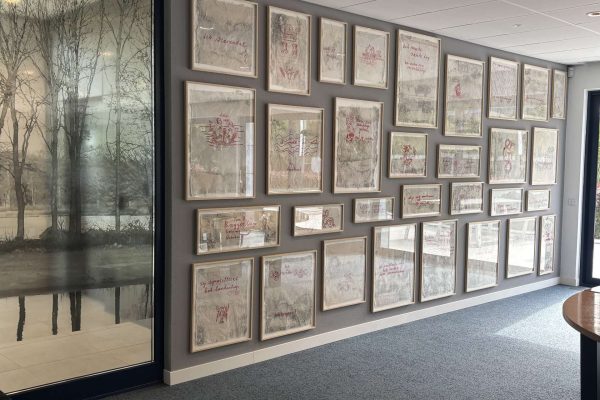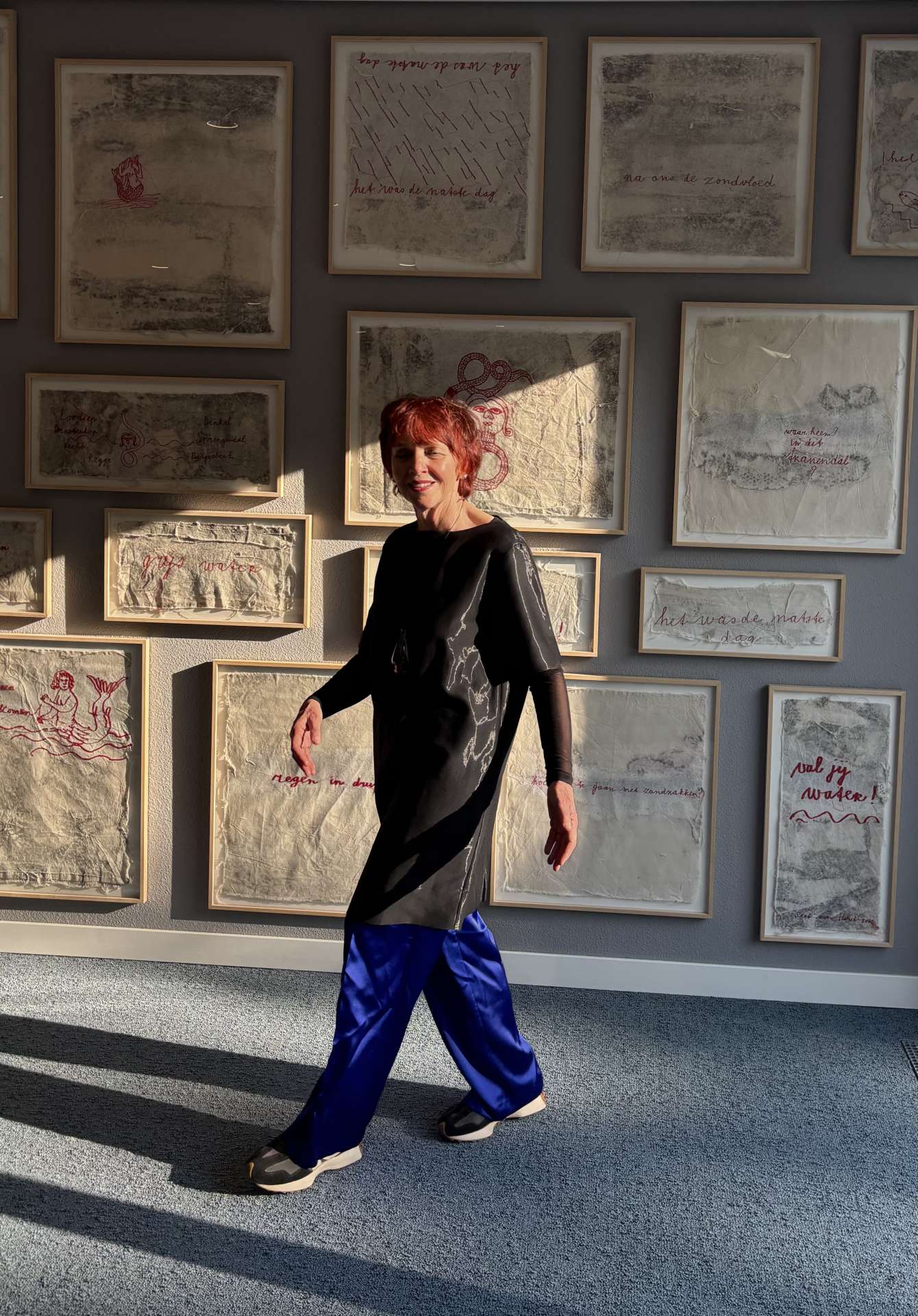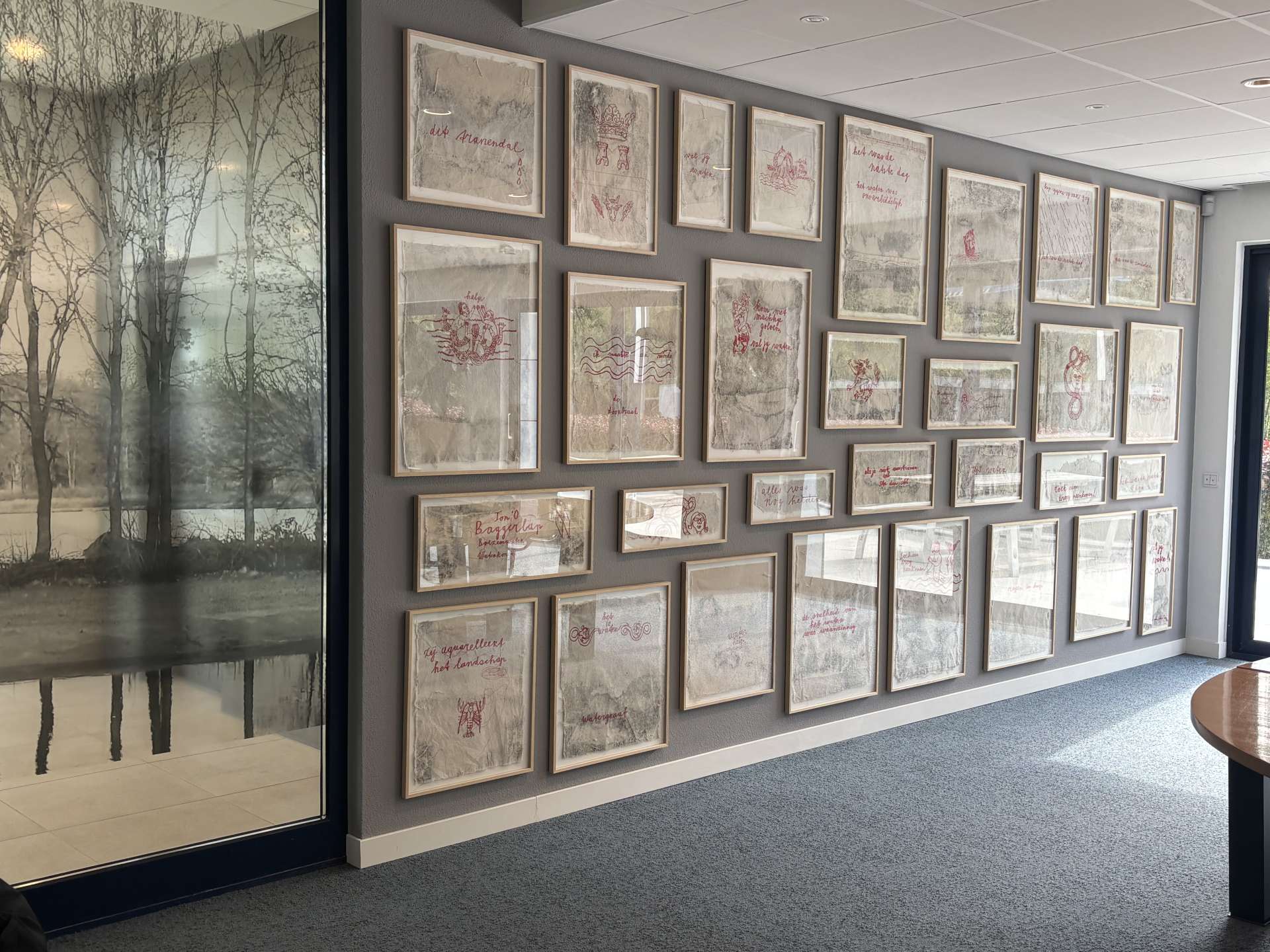

On 8 May 2026, Waterschap Vechtstromen in Almelo permanently acquired Val, Jij Water!, 31 embroidered and framed textile works by Seet van Hout, now installed on the walls of the Reggezaal.
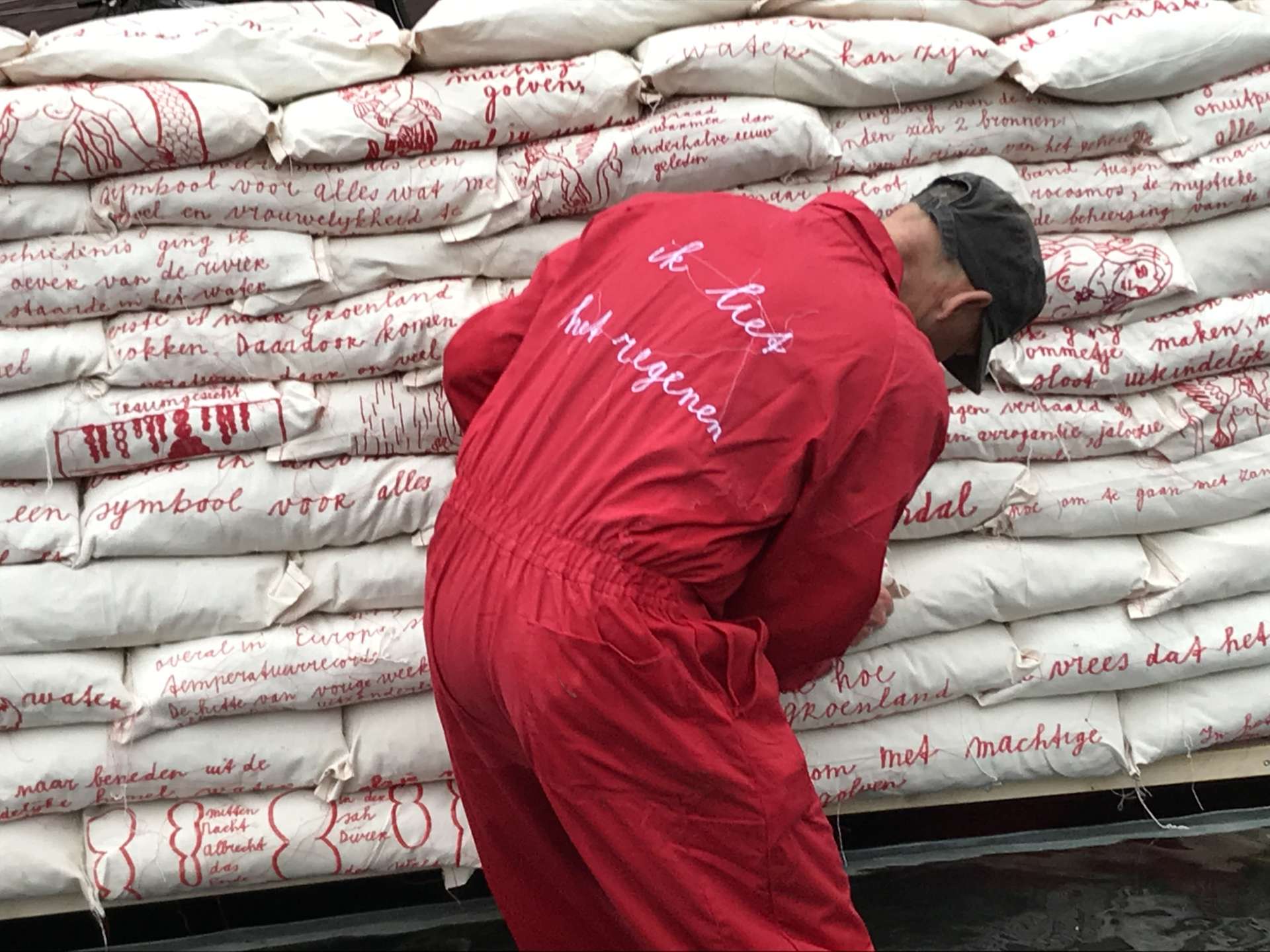
On that occasion, Seet van Hout gave the following speech, tracing the full journey of the work: from its origins as a temporary outdoor installation along the Jansbeek during the Gelderland Biënnale in 2019, to its transformation by rain and light, and ultimately its place in the Waterschap’s growing art collection. The photographs below document this journey, from sandbags along the stream to framed works on the wall.
VAL, JIJ WATER! Waterschap Vechtstromen, Almelo 8 May 2026
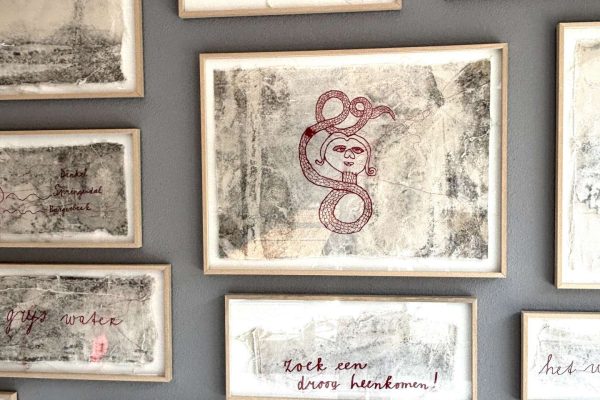
The 31 framed works titled Val, Jij Water! have finally found their home on this beautiful wall of the Reggezaal.
It began in 2019 when, as part of the Gelderland Biënnale, I was invited — along with 15 other artists — to each create a temporary outdoor work along the Jansbeek in the centre of Arnhem. We were asked to respond to the complex relationship we have with Nature: we want to control it, and at the same time we want it to run its course. We need it, and sometimes it threatens us.
A fascinating theme, in a summer that broke record after record in terms of heat, drought and rainfall. It was one of the warmest years on record — the first time temperatures exceeded 40 degrees — with a very mild winter reaching 18.9 degrees at the end of February. An important theme, interpreted by each of us in our own way.
I had never made an outdoor work before, but decided to stay close to my own materials and way of working: in my case, textile. That usually serves me well.
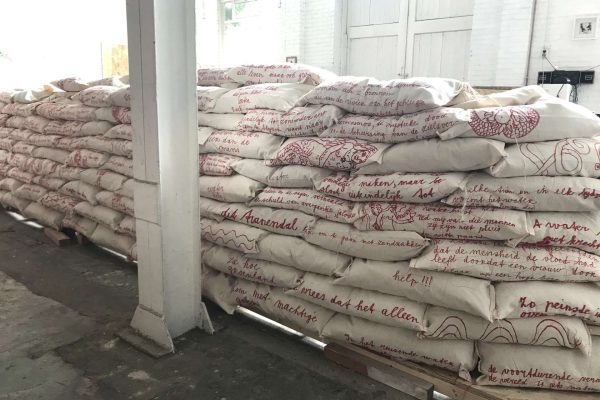
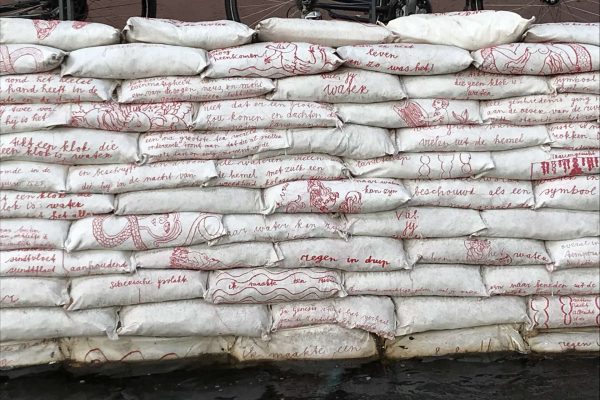
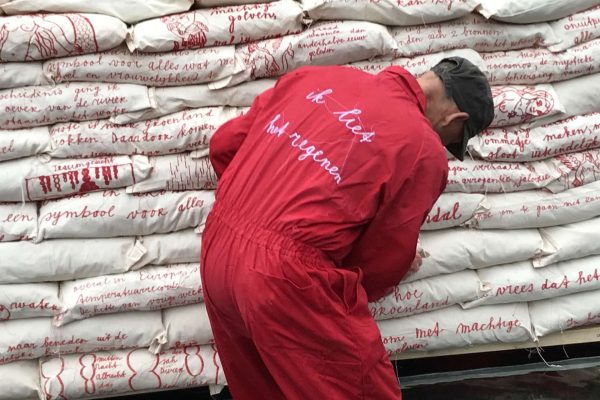
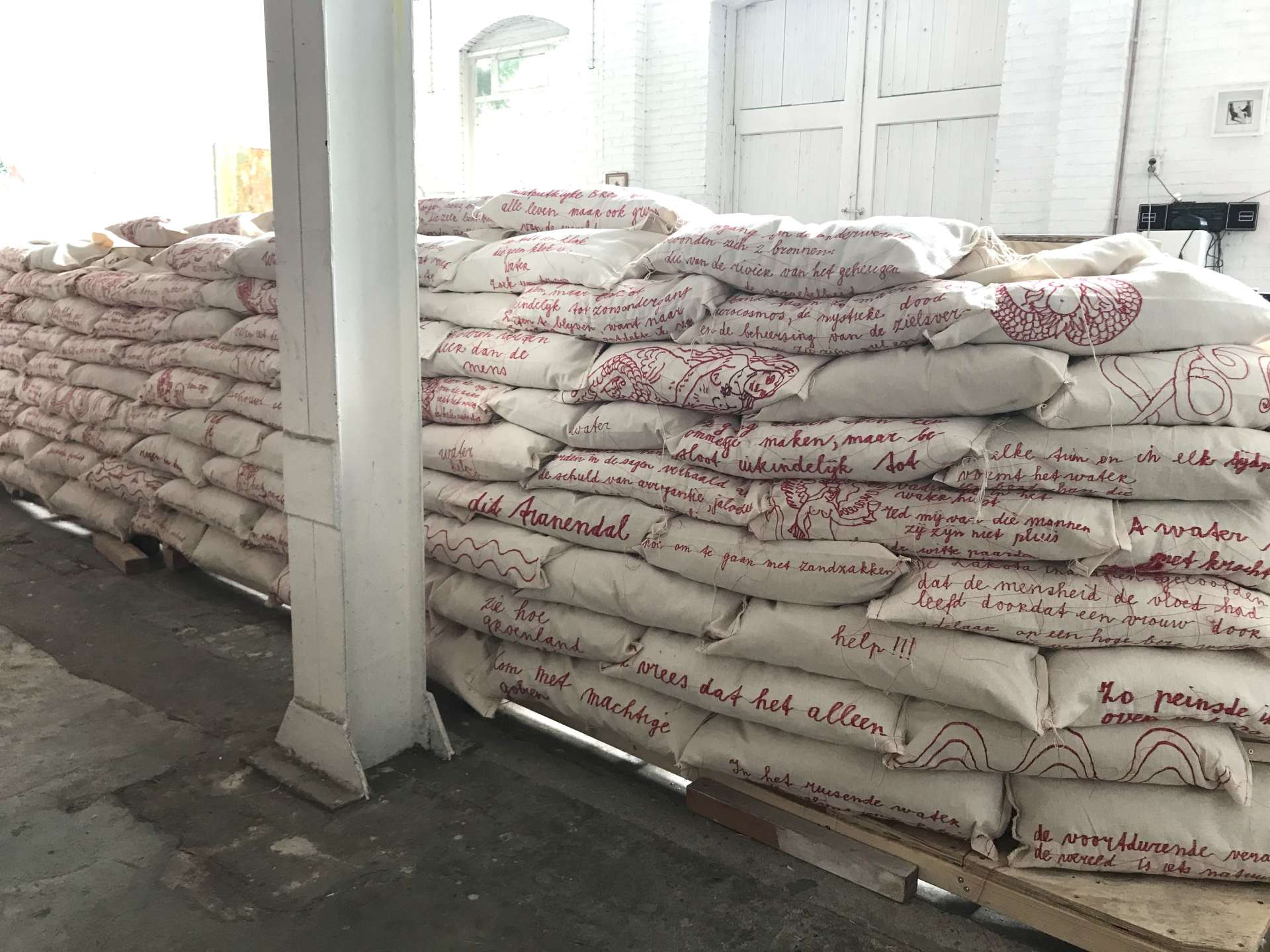
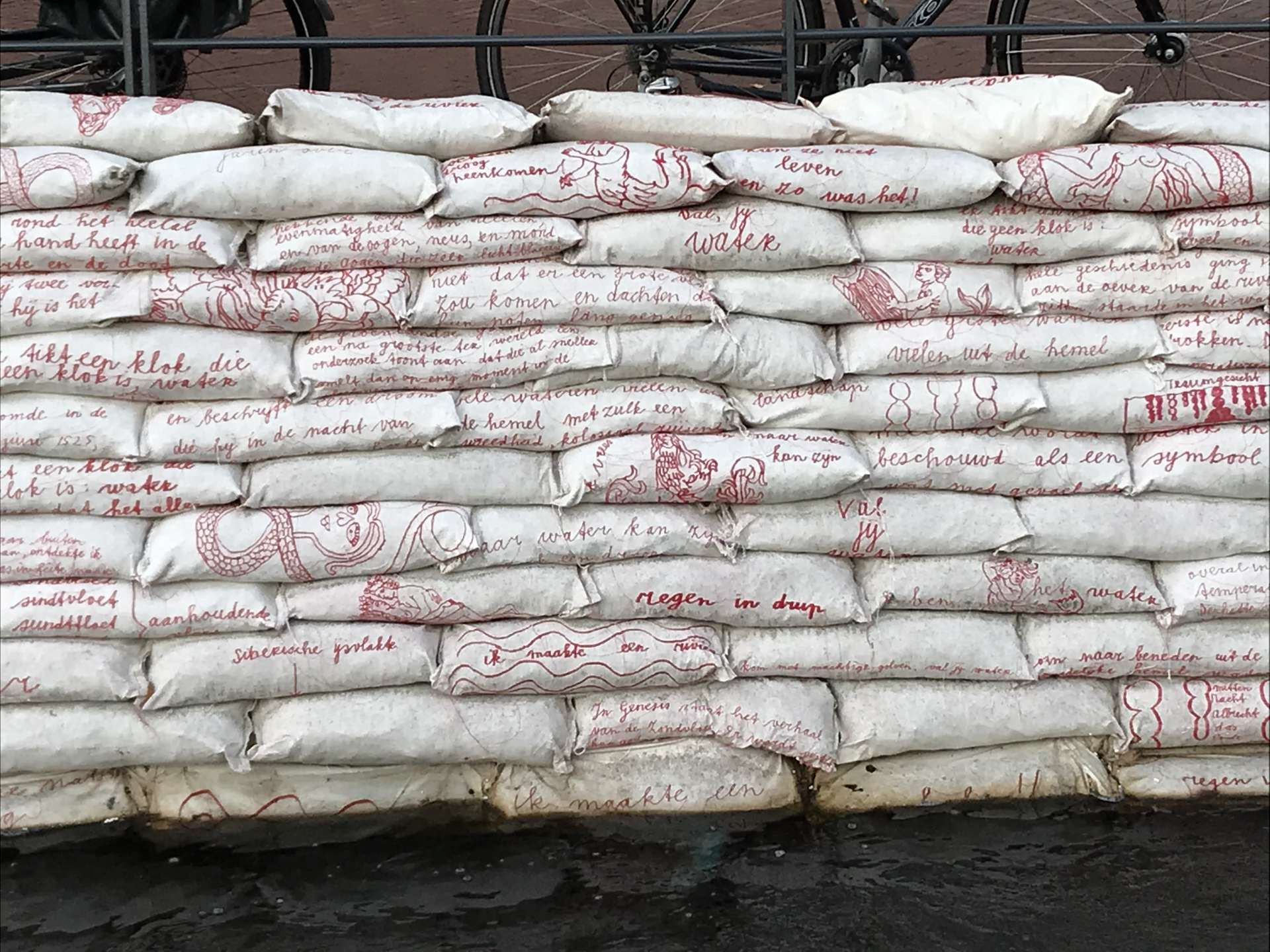
Long story short: I created a dam along the Jansbeek — a sandbag wall, of the kind used to hold back floodwater. That was already quite an unusual sight: a wall of sandbags alongside a slowly flowing stream, channelled behind a brick wall.
By embroidering the bags, the work became poetic and estranging. I stitched texts from newspapers about climate change, lines from poets and thinkers about water, rivers and the flood — a recurring myth across many cultures — alongside images of mermaids and waves.
From the very first day of the outdoor exhibition, it rained heavily throughout that autumn of 2019, and after six weeks — at the close of the Gelderland Biënnale — the fabrics had been marked by light and rain.
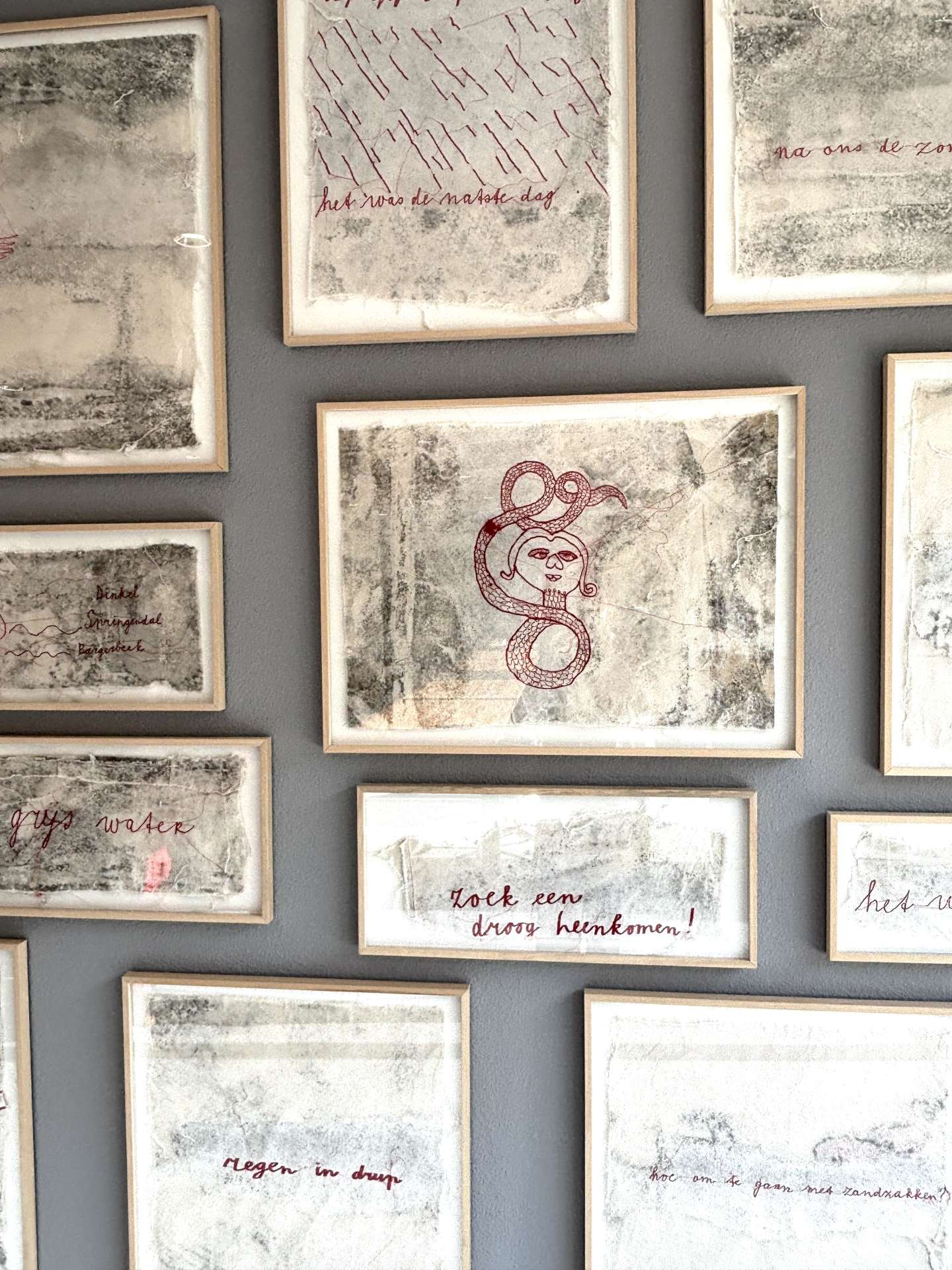
I cut open the bags, removed the filling, and washed and steamed the cloths at high heat. What emerged were beautiful, almost parchment-like panels, marked by the water, which gave them additional strength and meaning.
In 2020 I had a small presentation at De Tuinkamer in Lent, where I nailed these panels to the wall in an overlapping arrangement. Stefan Kuks and Marijn van Berkel visited the exhibition and felt the work could be a fitting addition to the collection of Waterschap Vechtstromen.
As a further contribution, I asked employees of the Waterschap for words or concepts relevant to their field of work, which I then embroidered into the pieces as well. I received wonderful terms back, particularly from Stefan and William — such as: fish ladder, Ton’O, grey water, and the meaning of the emblem of Waterschap Het Ommerkanaal, with the arrow through the wolf’s back. These are largely incomprehensible to the layperson, but they certainly invite conversation. Coats of arms from the magnificent book Zichtbaar Verleden — 140 years of history of Waterschap Vechtstromen — were also incorporated.
The 31 works have been beautifully framed by framer Toon Govaarts from Enschede, using plain window glass so that reflections of the surroundings also become visible.
I am very pleased with this wall for Val, Jij Water!, which feels entirely at home in the growing collection of Waterschap Vechtstromen, and I hope that everyone who uses this Reggezaal will enjoy the work just as much.
I would like to thank Stefan Kuks, Marijn, Henriëtte, Heidi, Karel, William and Henk for the wonderful collaboration — and I have a small token of appreciation for each of you.
— Seet van Hout